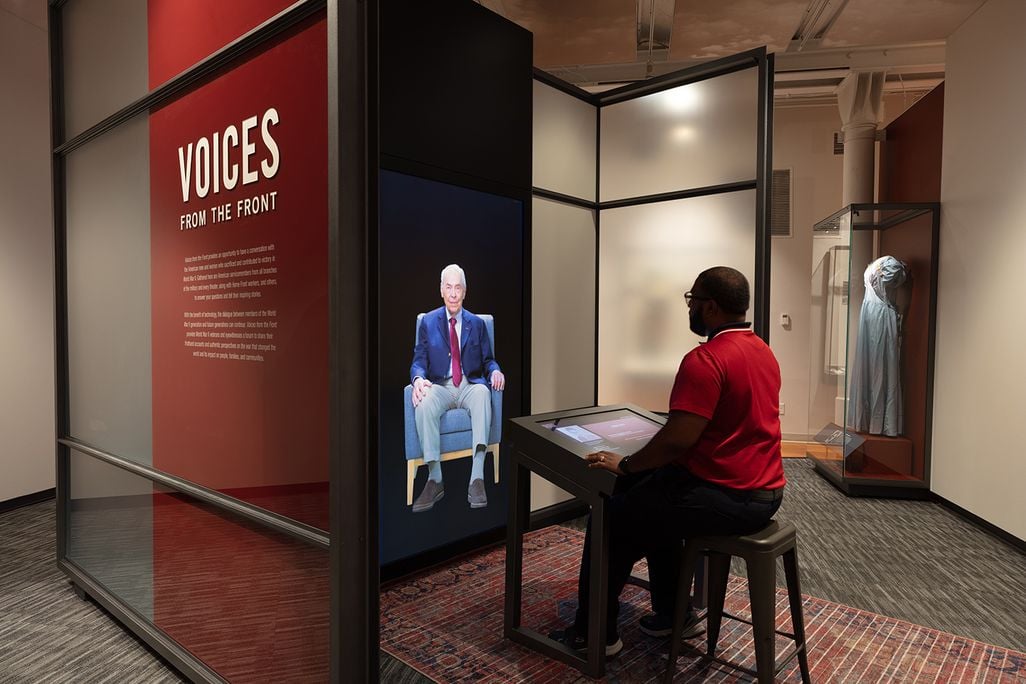
How do we keep the stories of the past alive when the voices who told them begin to fade? This is the central challenge facing museums dedicated to preserving critical moments in human history, particularly World War II. For younger generations, the events of the 1940s—the sacrifices, the triumphs, and the terror—can often feel distant, confined to textbook pages, static displays, or movie dramas. The core problem is one of engagement: simply viewing artifacts or reading placards often falls short of fostering the deep, personal connection that translates into meaningful learning and long-term retention.

they engage more deeply.
Research consistently shows that active participation and personal interaction significantly improve educational outcomes1,2. When visitors are able to ask questions and engage in a dialogue, their learning becomes more profound. Yet, as the veterans, home front workers, and survivors—the "Greatest Generation"—pass away, museums risk losing the authentic, first-person narratives that possess the most power to captivate and educate.
Voices from the Front
At the National WWII Museum in New Orleans, this challenge has been met with a groundbreaking solution: "Voices from the Front." Using Authentic Interactions’s StoryFile technology, this innovative exhibit harnesses the power of artificial intelligence and extensive video interviews to fundamentally change how visitors interact with history. It transforms the passive museum experience into a dynamic, two-way conversation, allowing guests to ask questions and receive authentic, video-based responses from soldiers, pilots, factory workers, and civilians who lived through this monumental era. This is more than a display; it is a vital bridge, ensuring that the personal stories of sacrifice and service remain vibrant, accessible, and intimately relevant for generations to come.
The Interview
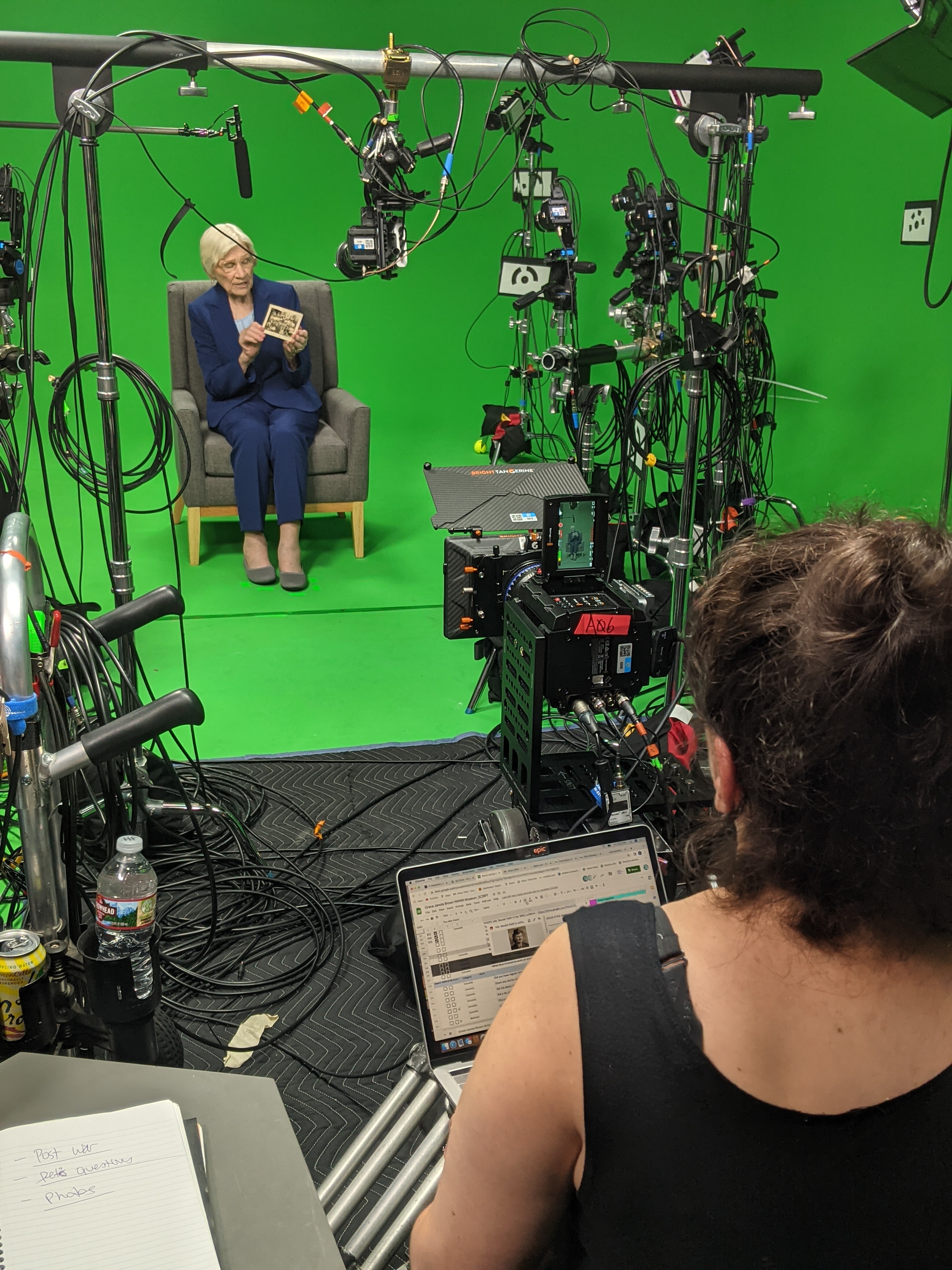 Grace Brown being interviewed.
Grace was a factory worker who made
parts for Boeing B-17 bombers and provided
inspiration for Rosie the Riveter.
Grace was a factory worker who made
parts for Boeing B-17 bombers and provided
inspiration for Rosie the Riveter.
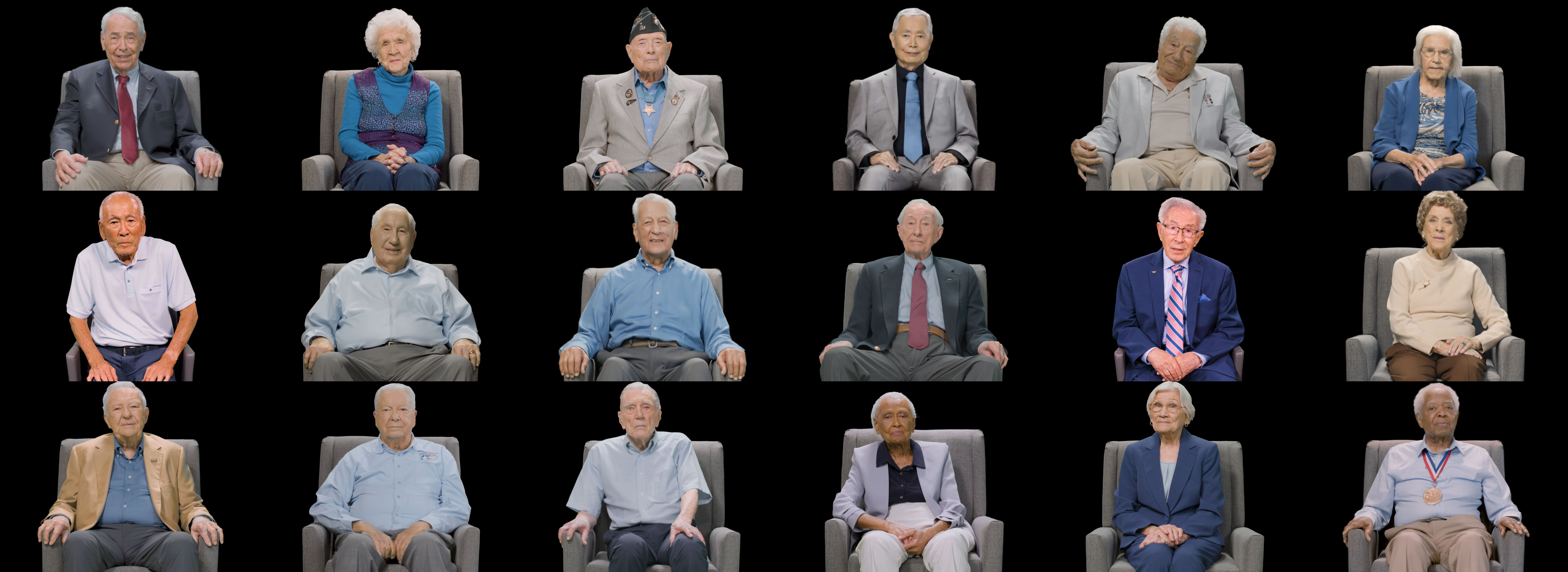
Between November 2021 and November 2023, StoryFile conducted 18 in-person interviews from an array of World War II participants, ranging from Medal of Honor-winning Iwo Jima veteran Hershel “Woody” Williams and pioneering Tuskegee Airman George E. Hardy to Holocaust survivor Ben Lesser and Japanese American Lawson Iichiro Sakai of the famed 442nd Regimental Combat Team. The interviews include home-front stories as well, such as Grace Janota Brown’s work in an aircraft factory and Margaret Kerry’s USO performances, alongside unique perspectives like Navy convoy escort Daniel Luévano and POW Olin Pickens. Together, these voices—some recorded before their passing and others from diverse service roles—offer visitors a richly textured understanding of the war’s global impact. Each script was customized for each interview’s life history. Each participant sat for up to 1,000 questions over 3-5 days. . Each interview was also filmed volumetrically with 18l cameras to allow for future 3D AR/VR applications.
Installation
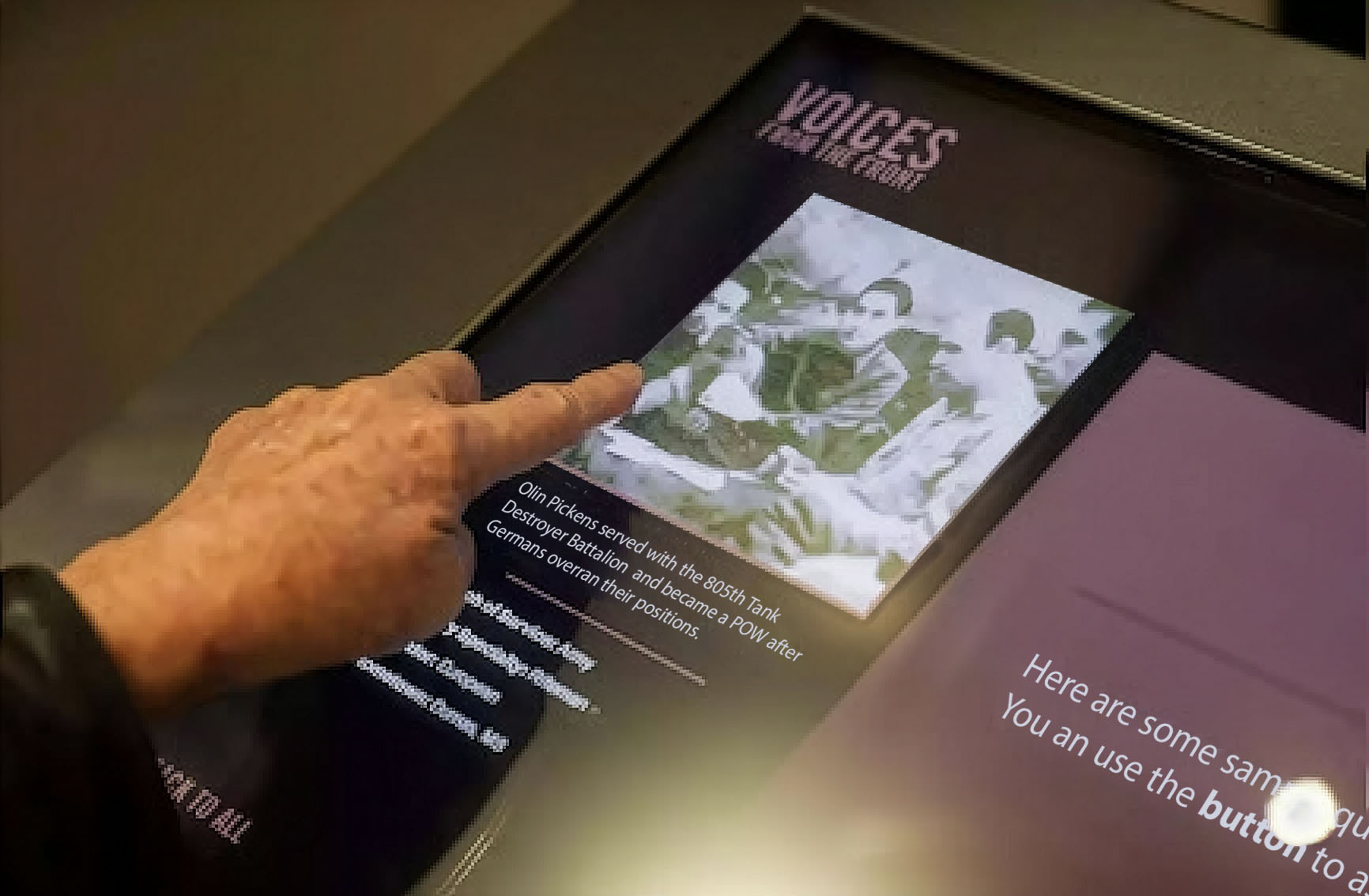
select subjects, read bios, and ask questions.
The “Voices from the Front” exhibit opened at the National WW2 Museum in New Orleans in March 2024. Visitors can explore different stations to learn about various aspects of the war, including the European and Pacific theaters, home front activities, and the war’s aftermath. Each interactive kiosk features all 18 interviews with authentic video responses triggered by visitors' questions. Users use a custom touchscreen kiosk to ask questions, and read biographical and suggested questions for each individual. The interactive kiosks continue to maintain a 50-60% utilization rate, five times higher than other passive video installations. The museum continues to update the exhibit with new stories and is expanding to other museums around the country.
Visit Voices from the Front in the Malcolm S. Forbes Rare and Iconic Artifacts Gallery at the National WWII Museum in New Orleans, Louisiana.
References
- Bennett, S., Harper, B., & Hedberg, J. (2002). Marketing undergraduates' attitudes towards query-based instructional machines as a possible learning medium. British Journal of Educational Technology, 33(4), 475-489.
- Koedinger, K. R., Kim, J., Jia, J. Z., McLaughlin, E. A., & Bier, N. L. (2016). Is the doer effect a causal relationship?: how can we tell and why it's important. In Proceedings of the Sixth International Conference on Learning Analytics & Knowledge (pp. 388-397). ACM.
Media Coverage
Read more about this exhibit in leading publications:



.svg.png)